


NDT Equipment Manufacturer in India | Magkraft NDT
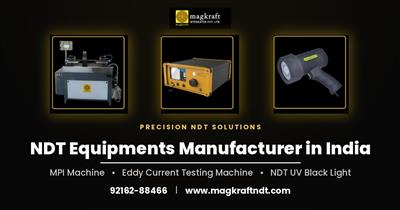
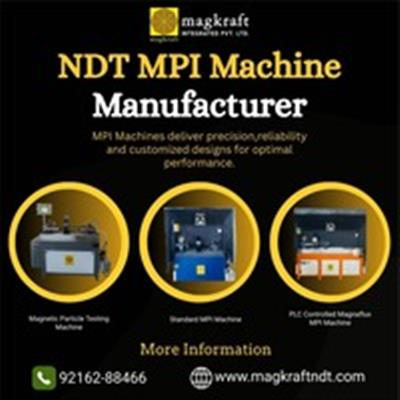
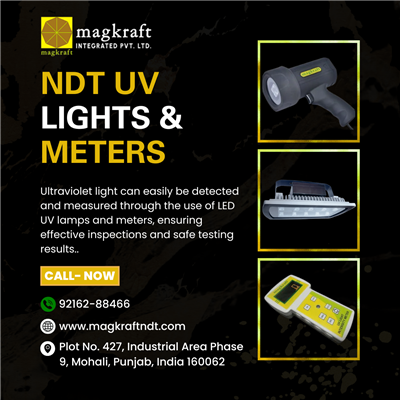
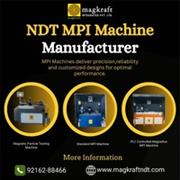
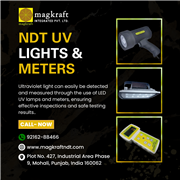
In industries where safety and quality matter, even a small defect can lead to major problems. Whether it is a weld, a metal component, a pipeline, or an industrial structure, knowing what is happening beneath the surface is essential. This is where Non-Destructive Testing (NDT) plays an important role. As industrial development continues across India, the demand for dependable inspection solutions is growing. Businesses are looking for reliable NDT equipment manufacturers in India who understand their testing requirements and can help them maintain quality, safety, and performance. For companies involved in manufacturing, fabrication, construction, oil and gas, and other industrial sectors, choosing the right NDT equipment is an important step towards better inspection practices. What Is NDT Equipment and Why Does It Matter? Non-Destructive Testing is a group of inspection methods used to identify defects or evaluate the condition of materials without damaging the component being tested. NDT equipment helps inspection professionals find issues such as cracks, corrosion, internal discontinuities, and surface defects before they become serious concerns. This makes it an important part of quality control and preventive maintenance. The right equipment can help businesses improve inspection accuracy, reduce unnecessary material waste, and make better decisions about the condition of their products and structures. More importantly, reliable testing helps companies meet applicable quality requirements and maintain confidence in their work. Types of NDT Equipment Used in Indian Industries Different materials and applications require different testing methods. Understanding these methods helps businesses select equipment that matches their inspection needs. 1. Ultrasonic Testing (UT) Equipment Ultrasonic testing uses high-frequency sound waves to examine materials and identify internal flaws. It is commonly used for weld inspection, thickness measurement, and detecting discontinuities inside suitable materials. Ultrasonic testing equipment is useful in industries where internal material condition needs to be evaluated without cutting or damaging the component. 2. Magnetic Particle Testing (MPT) Equipment Magnetic Particle Testing is used to identify surface and near-surface discontinuities in suitable ferromagnetic materials. The method involves magnetising the component and applying magnetic particles to reveal indications associated with defects. It is commonly used for inspecting welds, castings, forgings, and other ferromagnetic components. 3. Liquid Penetrant Testing (LPT) Equipment Liquid Penetrant Testing helps reveal surface-breaking defects in non-porous materials. The process uses a penetrant that enters surface openings, followed by appropriate removal and developer application to make indications visible. It is useful for inspecting components where small surface cracks or other discontinuities need to be identified. 4. Radiographic Testing (RT) Equipment Radiographic Testing uses X-rays or gamma rays to examine the internal condition of a component. The resulting radiographic image can reveal certain internal discontinuities that may not be visible from the surface. Because radiographic testing involves ionising radiation, it requires suitable equipment, trained personnel, and strict radiation-safety procedures. 5. Visual Testing (VT) Equipment Visual Testing is one of the most widely used inspection methods. It involves examining a component directly or with suitable visual aids to identify visible imperfections, damage, or irregularities. Depending on the application, inspection tools may include lighting equipment, mirrors, magnifiers, borescopes, and other visual inspection aids. Each testing method serves a different purpose. The best choice depends on the material, component design, expected defect type, inspection conditions, and applicable standards. What to Look for in an NDT Equipment Manufacturer in India Choosing an NDT equipment manufacturer is not simply about comparing prices. The equipment must be suitable for the intended application and provide dependable performance under real working conditions. Here are a few important factors to consider. Product Quality and Reliability Inspection results are only useful when the equipment is appropriate for the job and performs as expected. Look for equipment with suitable technical specifications, dependable construction, and documentation that supports its intended use. Technical Support Having access to technical guidance can make a difference when selecting, operating, or maintaining inspection equipment. A reliable supplier should help customers understand product specifications and identify suitable solutions for their testing requirements.
